Tuesday, July 17, 2007

The Spin on al-Qaeda in Iraq

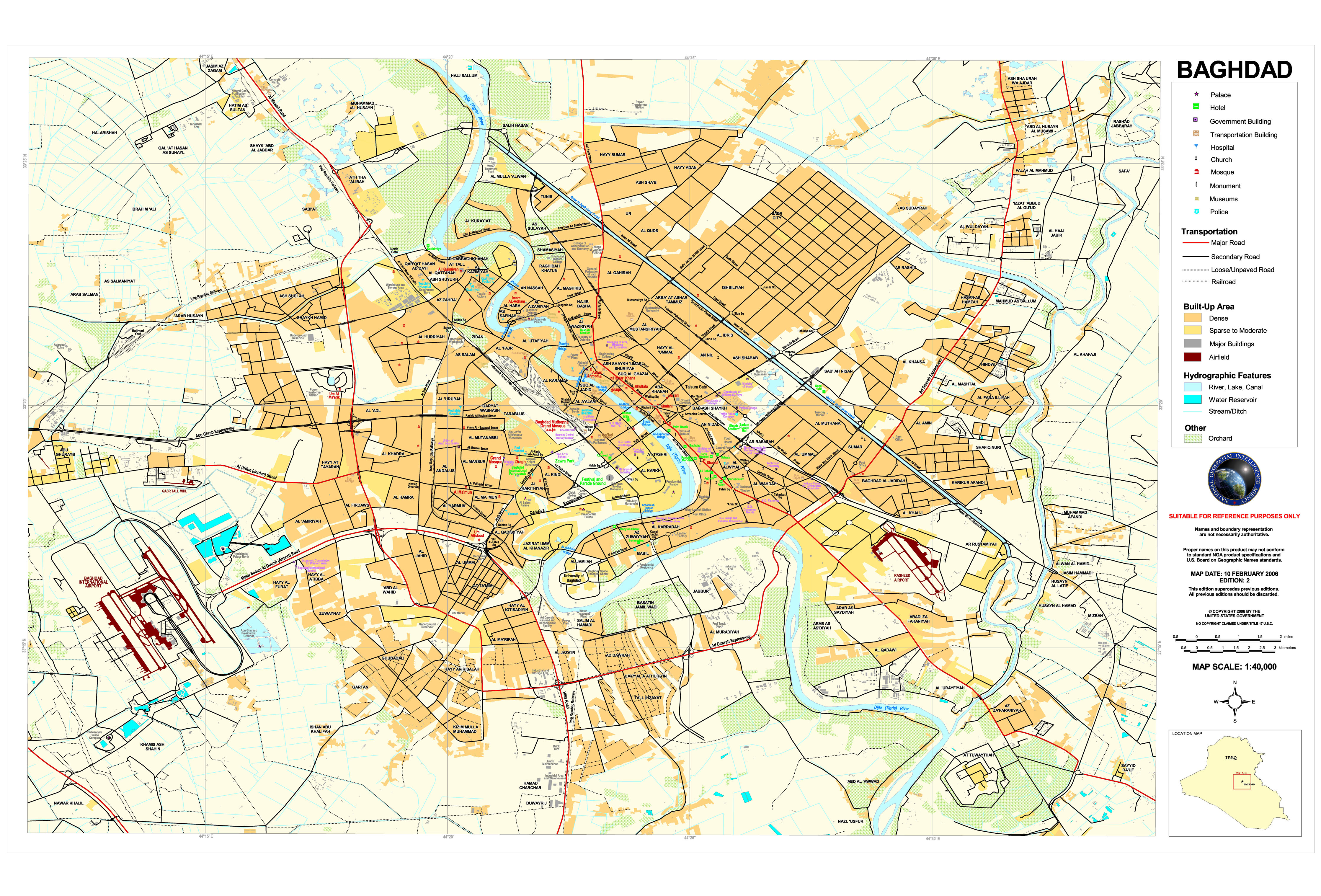
Baghdad. I don't know whether Jabbur, on the southern bank of the Tigris, is the
Arab Jabour cited as the operation's location (Map: Perry-Castaneda)


This morning I saw an interview with Col. Terry Ferrell, the commander of 2nd Brigade, 3rd Infantry Division of the U.S. Army, who answered questions about an operation that took place several days ago, on July 14. The operation targeted an Iraqi al-Qaeda (AQI in the military press release) leader by the name of Abu Jurah, in a suburb southeast of Baghdad. The particular brigade that he commands is the heavy brigade combat team (HBCT) "Spartan," which includes armored and artillery battalions. The latter were apparently used to full effect, firing two Excalibur rounds on Abu Jurah's safe-house.

The White House has been talking up its actions against al-Qaeda in Iraq recently. This looks like a another desperate attempt by the administration to spin the obvious failure of the surge. It has become clear that the surge has been able to score only tactical victories against the insurgents - whether al-Qaeda, Sunni, or Shi'a. Thus, once again, the White House is trying to portray the army's battles in Iraq as efforts to defend America from al-Qaeda attacks on its soil.

Interestingly enough, the CNN anchor asked the colonel several times whether he believed that this latest operation would contribute to protecting Americans from an attack "in the homeland." Both times, he avoided giving an answer that would be either blatantly misleading or blatantly subversive of the current White House press campaign.

As the recent attempted attacks in the UK showed, Islamist terrorists inspired by al-Qaeda still pose a great threat to the world. It would be foolish to downplay the dangers posed by such groups. However, no one is served by the ongoing misinformation that casts Iraq as a front in the global war on terror. The Iraqi al-Qaeda "franchises," as a recent Stratfor report by Peter Zeihan argues, have a rather tenuous connection to the real al-Qaeda, currently holed up in Northwest Pakistan. The association between the Iraqi node and the bin Laden crew, Zeihan argues,
started with Abu Musab al-Zarqawi, who put himself forward as the leader of the Iraqi node of al Qaeda in 2004. While one can argue that al-Zarqawi might have been through an al Qaeda training camp or shared many of bin Laden's ideological goals, no one seriously asserts he had the training, vetting or face time with bin Laden to qualify as an inner member of the al Qaeda leadership. He was a local leader of a local militant group who claimed an association with al Qaeda as a matter of establishing local gravitas and international credibility. Other groups, such as Southeast Asia's Jemaah Islamiyah, had associations with al Qaeda long before al-Zarqawi, but al-Zarqawi was the first to claim the name "al Qaeda" as his own.

For al Qaeda, prevented by its security concerns from engaging in its own attacks, repudiating al-Zarqawi would make the "base" come across as both impotent and out of touch. Accepting "association" with al-Zarqawi was the obvious choice, and bin Laden went so far as to issue an audio communique anointing al-Zarqawi as al Qaeda's point man in Iraq.
Militants such as the late Abu Jurah are engaged in a terrorist war against the Iraqi government and U.S. forces in Iraq. However, their abilities to launch operations against America on its soil are virtually zero.

I am not sure what the current White House strategy on Iraq is. Everyone knows that the U.S. will not be involved much longer in the costly counter-insurgency that has claimed so many of its soldiers' lives for little in return. Given the failure to achieve calm in Iraq, the administration seems to be angling for dramatic victories against Iraqi al-Qaeda crews, before U.S. troops pull back to safer locations in the region. However, it is possible that the U.S. will have to redefine its mission in Iraq as war against Iraqi al-Qaeda, not in order to defend the homeland proper but to prevent Islamists from destabilizing U.S. allies in the region. The Americans would do well to observe developments in Pakistan, where al-Qaeda seems to be growing ever stronger in the frontier region of Waziristan and poised to attempt a dramatic strike against the unpopular Musharraf dictatorship.

Sunday, July 08, 2007

Meet Tzipi Livni, Spartan -- but wears jeans!

Watch out for this one (Photo: NYT)
The Sunday NYT Magazine's cover story today is a profile of Israeli Foreign Minister Tzipi Livni. The author is Roger Cohen, a regular Page 2 columnist for the International Herald Tribune. At the IHT, his stuff is savvy commentary on Europe from an American perspective. In the Livni profile, he sets out to explain to an American reader largely unfamiliar with contemporary Israeli politics and culture what makes Tzipi tick. So it's half a not so sympathetic deconstruction of a tough cookie, and half primer on the predicament of Israel today, decadent in its post-heroic age, paranoid about the future, but unwilling to make the hard sacrifices to secure it. The article is worth looking at for two reasons. First, you get a sense of Livni's vision, which is to say, her platform for the PM job. Time is not on Israel's side, she argues. In fact, the state, the Jewish character of the state of Israel, is being delegitimated. You could also say that Livni seems to be going for a "post-ideological" posture -- a new way forward. She's almost Obama-esque both in the content of her tirelessly forward-looking message and in her delivery. Which brings me to my second point. One thing that Cohen misses, for all the pretense of getting beneath the surface, is just how clever a politician Livni is. I think she puts one over on her interviewer, though he, in starting the article by relating an anecdote about her nerves and desire not to be seen as a tight-ass, thinks it's the other way around. What I mean is that this is clearly someone capable of using the foreign media to bolster her position in Israel and vis à vis her rival, PM Olmert. Somewhat ironically, Cohen mentions the FM vs. PM struggle to dominate the relationship with Washington as a recurrent feature of Israeli politics. Livni plays this game very well. And, disappointingly, that part of her story isn't at all covered in a profile in a US newspaper that dwells on her brief (but sexy?) stint in the Mossad and misses that she has strong US connections and speaks perfect English!

Saturday, July 07, 2007

Jesus in the Talmud

Something new to quarrel about. (Image: Princeton Univ. Press)

Princeton University Prof. Peter Schaefer has written a new book called "Jesus in the Talmud," which seeks to move beyond mere positivistic compilation of the meager rabbinic sources for the "historical Jesus," and to instead make sense of these cameos as a kind of "counter-narrative" to the Gospels. Who knew that the authors of the Babylonian Talmud knew the Gospels so well? I'm surprised to learn as well that, as the J-Post review points out, Jesus' Sanhedrin trial (not dealt with explicitly in the Talmud) lacked so much in the way of adherence to Jewish law. As it turns out, it's in the Babylonian Talmud that Jesus tends to show up, in what some zealots are calling, "pornographic" detail, whereas, in the Palestinian Talmud, Jesus appears less often, mostly as a target of an attack on magic. Schaefer's historical explanation here is compelling: in post-Constantinian Palestine, more and more the site of inspired imperial patronage, bashing Jesus was risky. But in Sassanian Babylonia, where an attack on Christianity could be construed as an attack on Rome, it was cool. The J-Post review is a little suspect, but Antiquitopia has read the book and provides interesting analysis. Oh, and in the interest of full disclosure, Schaefer's seen Amos in diapers, so we have to tread carefully here.

Wednesday, July 04, 2007

The Fourth of July

Chinatown, San Francisco, June 2007

Happy Fourth of July to all our American readers, and happy belated Canada Day to the Canucks!

Monday, July 02, 2007

War with Syria?

Battle of the Golan Heights, 1967 (Map Source: Wikipedia)

Uri Bar-Yosef is concerned about the lack of interest in negotiations with the Syrians. He argues that Israel is once again underestimating the enemy's willingness to go to war. From 1962 to 1967, Israel's political and military leaders believed that Egypt did not have a military option against Israel because of Nasser's embroilment in the war in Yemen. Hence, Israel persisted in escalating the conflict with Syria. According to Bar-Yosef, it was the domestic pressure inside Egypt, which eventually forced Nasser's hand and compelled him to move his army into Sinai. The lesson for today: pushing Assad into a corner could lead to a Syrian attack on Israel, which would be painful, even if unsuccessful.

Bar-Yosef seems to be arguing for the primacy of domestic politics in understanding the likelihood of a Syrian decision to go to war. This frame of reference, in his view, increases the possibility of Assad turning to a military option. On the other hand, if we were to see foreign policy and such measures as national interest and security as the primary factors, it would seem rather obvious that it is not in Syria's interest to attack Israel.

In the late 1960s and 1970s, West German historians such as Fritz Fischer, in his second work, War of Illusions (1969), and Hans-Ulrich Wehler in his German Empire (1972), suggested that the empire's ruling elite saw the war as a domestic stabilizing factor that would function to safeguard its power from the challenges of democratization. This thesis has since been heavily revised, but few historians today would argue for the absolute supremacy of foreign policy considerations in the decision to go to war.

Does Assad need a war (or peace agreement, for that matter) to stay in power? What would the cost-benefit ratio of such a decision be?

Tuesday, June 26, 2007

Rocket Wars of Attrition: the Lessons from Summer 2006


Antidote to the post that follows below: Shlomi Saranga and Moshik Afia, "Sweet Dream" (2002)

I have not seen a great deal of discussion about a recent report, citing unnamed UN officials, that Iran is deploying missiles in Syria. Obviously, Syria already possesses a significant arsenal of surface-to-surface missiles as well as the type of katyusha rockets used with such effectiveness by Hizbullah against Israel in last summer's war. It should surprise no one that in the wake of Israel's failure to stop Hizbullah's fire on the country's civilian population, the Syrians see these kinds of missiles as their best strategy. The question is, what can Israel do about it?

The Israeli military has yet to come up with a military doctrine to counter a rocket-based war of attrition, as the surrender of Sderot to the Palestinian qassams showed. Worse, it does not look like the Israeli military and government have explained to the public what exactly the country is up against. Despite Gabi Ashkenazi's replacement of Dan Halutz as Chief of the General Staff, a great deal of air force spin continues to dominate assessment of the last war. One of the myths still circulating is that the air force's "launcher hunting" doctrine was able to take out most of Hizbullah's Iranian-supplied long-range missiles. A report by Uzi Rubin of Bar-Ilan University's Begin-Sadat Center for Strategic Studies released this month argues that the "intensity of long-range rocket attacks" in fact "remained fairly constant" throughout the war, averaging 4 per day (Rubin, "The Rocket Campaign against Israel during the 2006 Lebanon War," p. 25).

Rubin makes it clear that Hizbullah "dominated the battle of the rockets" (p. 13). Neither the air force nor the late ground invasion (and definitely not the aimless artillery barrages) succeeded in stopping or diminishing the intensity of Hizbullah's attack. While it is true that toward the end of the war the air force managed to destroy every launcher from which rockets had been fired - reducing the sensor-to-shoot time to one minute (an unprecedented achievement) - as every resident of the north can attest, Nasrallah was able to give Israeli civilians a bitter reminder of who owned them until the last day before the cease fire (see all of Carmia's entries from August 13 for a taste).

All this was accomplished using very simple weapons. Rubin concludes that few if any Iranian rockets hit Israel, one of the exceptions being a Fadjr-3 240 mm rocket that struck Haifa. Another Iranian rocket may have surfaced in Beirut, after an air force attack blew it up, sending a large cylindrical object flying into the air; some enthusiastic Hizbullah fans at the time mistook it for a downed Israeli F-16 (see J.'s post).

The majority of the rockets fired at Israel were 122 mm Grad rockets with 50 km range, 220 mm (70 km), and some 302 mm (90-100 km). Most of these were fired from launch batteries with 4 tubes; at least one launcher had 12 tubes. For the heavier rockets, Hizbullah tended to use mobile launchers, which it fired from residential areas. The lighter rockets, on the other hand, appear to have been fired using stationary launchers that were camouflaged and hidden slightly underground in agricultural areas. Katyusha crews would use hydraulic mechanisms or manual levers to raise these launchers up and then fire them using remote controls. These stationary launchers were set up long before the war, and each one was aimed at a different destination in Israel. They would be fired once every twenty-four hours - but Hizbullah may have had up to 150 such sites (Rubin, p. 9).

Altogether, Hizbullah's "strategic rocketing" killed 41 Israeli civilians, and 12 soldiers (the Kfar Giladi incident), seriously wounded 250 noncombatants, and caused 100,000-250,000 to flee their homes. It also destroyed 2,000 dwellings. Ironically, "passive defence" saved the most Israeli civilians' lives. More specifically, early warning systems, staying in bunkers and safe rooms, or following the instructions about retreating to the south side of apartments in many cases prevented casualties(here's a related sample of unfunny humor from those times: "It would be nice to shower first but the bathroom faces north (that's bad, not because of the feng shui)) .

Recently, I came across something that Nobody wrote, in which he mentioned the dangers of taking for granted Israel's supposed military superiority as well as its permanent presence in the region. I don't remember his exact wording, but he seemed to be taking on one of his favorite targets, reckless "peace lunatics." I have to say that when it comes to Syria, we would do very well to heed the advice of Nobody as well as of our Lebanese friends. I, too, have been guilty of enthusiasm about Syrian "channels." But as this latest missile deployment and their intertwined strategies in Lebanon show, the Syrians and the Iranians are committed to an alliance that will take a lot more than engagement to undo.

Monday, June 25, 2007

Signs of Life from Gilad Shalit


Earlier, I heard the Gilad Shalit tape that was released by Hamas today. It was painful to listen to him speaking from captivity, and even harder to think of what his parents must be going through. Obviously there is some joy too, as this is the first sign of life that we have from the young soldier since he was kidnapped exactly one year ago. But it is not at all clear whether he will be released before his twenty-first birthday on August 28.

Here is a transcript of the tape; it is slightly modified as I noticed that there were some small mistakes in Ha'aretz's. My (very literal) translation is below.

אני גלעד בן נועם שליט הכלוא אצל כתאיב אל שאהיד עז א-דין אל קסאם. אמא ואבא,אחותי ואחי , חברי בצה"ל. אני מוסר לכם מתוך הכלא דרישת שלום ואת געגועי לכולכם. עברה עלי שנה שלמה בתוך הכלא, ועדיין מצבי הבריותי מידרדר. ואני חייב לאשפוז ממושך בבית חולים .אני מצטער על חוסר ההתעניינות של הממשלה הישראלית וצה"ל ואי-היענותם בעניין שלי ובדרישות כתאיב אל קסאם. זה ברור שהם חייבים להיענות לדרישות אלו בכדי שאני אשתחרר כבר מהכלא. ובמיוחד שאני הייתי במבצע צבאי מתוך הוראה צבאית. ולא הייתי סוחר סמים. וכמו שיש לי הורים, אמא ואבא, גם לאלפי האצירים הפלשתינאים יש אמהות ואבות, שחייבים להחזיר להם את בניהם. יש לי תקווה גדולה לממשלתי שתתעניין בי יותר ותיענה לדרישות אל-מוג'אהידין. הרב"ט גלעד שליט.
I am Gilad, son of Noam Shalit, imprisoned with the Katayeb al-Shaheed az a-Din al-qassam. Ima and Abba [mom and dad], my sister and my brother, my friends in the IDF. I convey my greetings to and my longing for you from jail. A whole year has passed over me inside the jail, and the condition of my health is declining. And I require long-term treatment in the hospital. I regret the lack of interest by the Israeli government and the IDF and their indifference in/to my matter and the demands of Katayeb al-Qassam. It is clear that they need to accept these demands in order for me to be released already from the jail. And especially since I was on a military mission under military order. And I was not a drug dealer [emphasis added].* And just as I have parents, Ima and Abba, so do the thousands of Palestinian detainees ['atzirim] have mothers and fathers, that [sic] their sons have to be returned to them. I have great hope that my government will interest itself in me more and accept the demands of el[sic - I am pretty sure he does not say "ha-mujahedin"]-mujahedin.
*This is a reference to the case of the Israeli businessman Elhanan Tanenbaum, who was lured to Lebanon by Hizbullah agents who apparently enticed him with promises of money he could earn through a drug deal. Tanenbaum was swapped for several high-profile prisoners by Ariel Sharon in 2004.

Shalit is being held by the same criminal gang that abducted the BBC reporter Alan Johnston. A video of the Johnston was released shortly before the Shalit tape. The group holding them is rumored to be headed by a certain Mumtaz Durmush, affiliated with al Qaeda. Immediately after the Hamas take-over in the Gaza strip, there were reports of clashes between this group and Hamas's armed forces. However, it appears that the two have come to some kind of agreement, although tensions remain. Hamas is clearly trying to use the tape to gain leverage for itself - to force Israel to its knees - and the captors are playing along, since any gains achieved will also reflect positively on them.

The tape is aimed squarely at Israeli public opinion. It is an effort to build up public pressure to force the government to meet the demands of both the Hamas government on one hand and the kidnappers on the other.

On the tape, Shalit is reading from a prepared text. Sometimes the pauses are awkward. It obviously does not sound like a fluid statement coming directly from him. But it also does not sound as if he is reading it with a gun pointed to his head. Making Shalit compare his plight to that of Palestinian security prisoners was an appeal not only to the Israeli public but also to the Palestinian and Arab publics listening to the tape with translation.

Sunday, June 24, 2007

Behind the UNIFIL Attack

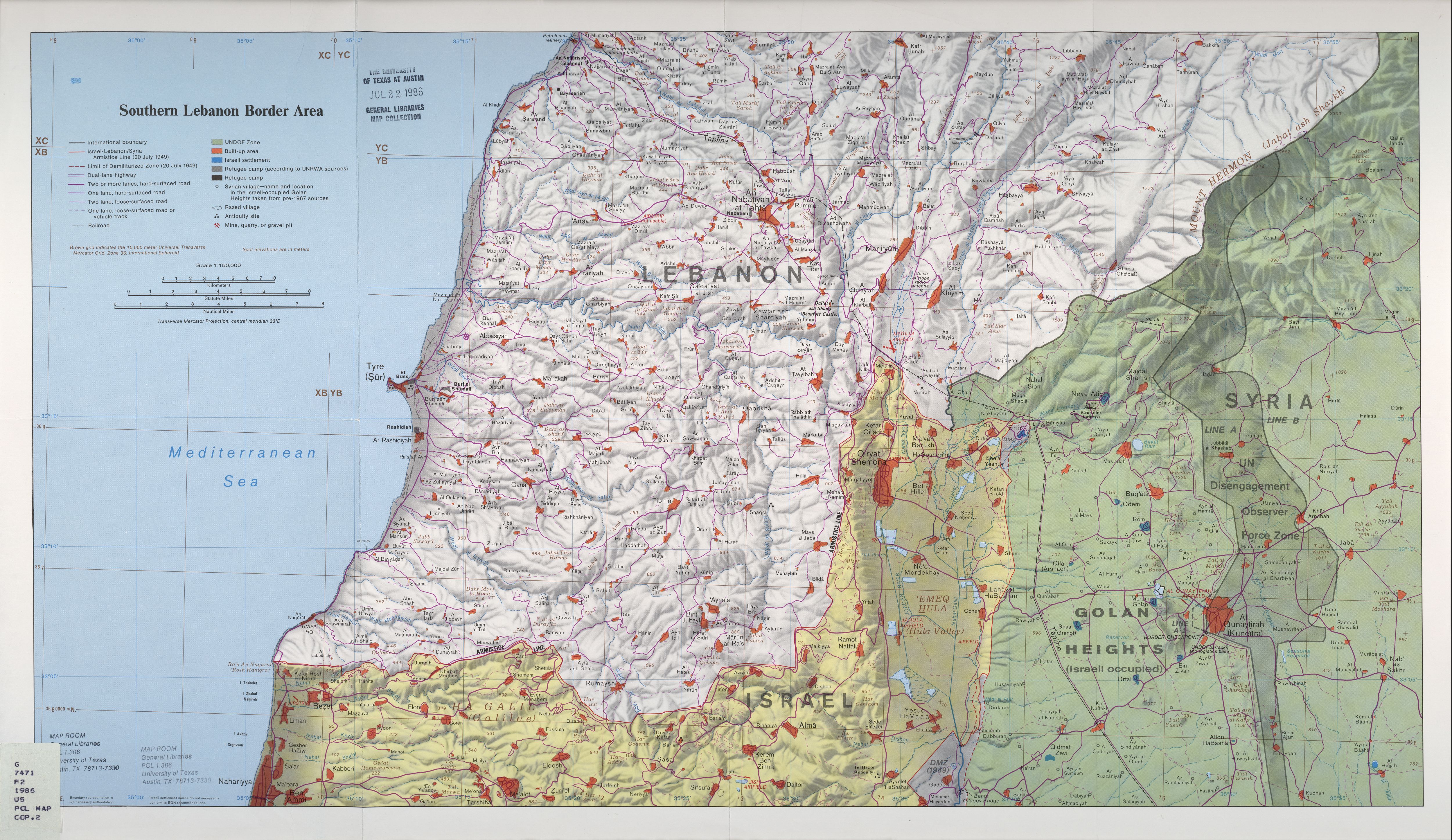
(Click to enlarge. Go to the link for even more detail. Map: Perry-Castaneda)

Today, what appears to have been a suicide car bombing killed 3 Spanish and 3 Colombian UNIFIL soldiers traveling in an armored troop carrier, somewhere between the towns of Marj 'Ayoun and Khiyam (circled in blue on the modified map above). The area of the attack is a few kilometers north of the Israeli town of Metulla, and just west of the Hazbani River. Two other Spanish peacekeepers were injured.

In the wake of the katyusha attack that hit Qiryat Shmonah on June 17, Spanish UNIFIL officers in particular assured the Israelis that they would do their utmost to prevent further attacks. Around the same time, rumors circulated in the press to the effect that the Italians had reached some kind of deal with Syria that would protect their UNIFIL soldiers from being hurt in attacks. I remember wondering whether the Spaniards might not regret their energetic efforts to carry out the mandate of the UN force in Lebanon. I do not think that it is an accident that Spanish troops were targeted in today's bombing, which has so far claimed the lives of 5 soldiers.

To borrow a phrase from Jeha, Syria still has enough "plausible deniability" to make the useful idiots as well as the malicious cast doubt on that government's involvement. Others, however, will probably agree that Syria has decided to play its third card. After the failure of the Fath al-Islam uprising attempt in northern Lebanon, Syria has decided to cause trouble in the south - most likely through Palestinian proxies rather than Hizbullah, which went as far as to condemn the attack (Ha'aretz) - perhaps an indication of the declining approval for explicitly pro-Syrian actions inside Lebanon. The country's rallying behind the Lebanese army throughout the ongoing campaign at Nahr el-Bared seems to have constrained the flexibility of Hizbullah as well as Aoun's FPM.

I thought it was interesting also to see the response to this latest bombing. Israel may yet be provoked into a response against Hizbullah or Syrian-backed Palestinian groups in the south, but right now, it is hoping to use these provocations to bolster the UNIFIL mandate.

Southern Lebanon has posed a security challenge to Israel since the country's independence; indeed, attacks on Jewish settlements in the Galilee go back three decades earlier still ("Tel Hai," English, Hebrew). Over the past 60 years, Israel's strategic aims in the northern Galilee and southern Lebanon have been mostly uniform - but one can isolate two distinct strands. Early Zionist leaders and some Israeli policy-makers saw control of Lebanon's south as necessary (or at least desirable) in order to assure access to water (1). However, the far more important determining factor since the 1960s has been security (2). To counter the threats posed by irregulars operating in southern Lebanon, Israel has resorted to a variety of defensive and offensive measures. UNIFIL, too, has played a small role in this strategy before. Given last summer's failure in Lebanon, Israel now seems more willing than ever before to give UNIFIL a bigger share in countering the threats (to Israel as well as Lebanese security) emanating from Lebanon's south.

Friday, June 22, 2007

Israeli Models Show Skin for Israel

(Thanks to Geoff for this link)

I was watching CNN earlier this morning and saw some coverage of the latest Israeli foray into public relations. The geniuses at the Foreign Ministry apparently thought it was a good idea to invite Maxim magazine to do a photo shoot of Israeli models. An added incentive to bring in the obligatory puns ("women with guns") was that the featured models had done their military service in the IDF. The Maxim "Israel Defense Forces Issue" is due in stores on June 26.


Apparently, the New York consulate also promoted a gala event (actually, a Maxim Party), with consular officials in attendance; the advertisement featured a scantily-clad Gal Gadot. This, in turn, led to condemnations by MKs Colette Avital (Labor), the former consul-general in New York, and Zehava Gal-On (Meretz), who complained that
It is unfortunate that the New York consulate thinks that Israel's relevance will be expressed by the use of naked women who are treated as an object, and not as women of substance who exude achievement and success. It's a shame that the consulate has not understood that countries of the Western world cannot market themselves through the use of half naked women (Ha'aretz).
I have a lot of respect for Gal-On and Avital. It's true that the campaign is unusual, to say the least. Furthermore, given some of the unfortunate positions in which certain Israeli ambassadors have found themselves over the years, a Maxim photo shoot is not exactly going to enhance respect for the Israeli diplomatic corps. However, I think they are wrong about this.

After seeing the CNN segment, I have to say that the whole campaign might not be such a bad idea. To be sure, the photo shoots are exploitative - so are 90% of the advertisements on our television screens and billboards. These women are professionals, and whoever thinks that they ought to have turned down a modeling shoot that promotes Israel (as opposed to Calvin Klein) should complain to their agents. I find the outrage misplaced, and I definitely think that any arguments appealing to the norms of "countries of the Western world" are rather silly here. There is nothing indecent about these models, just as there would be nothing unseemly about promoting Israel by showing clips from the Gay Pride parade in Tel Aviv. These models represent Israel as much as haredim praying at the Kotel.

The CNN anchors were obviously amused by the whole thing, and the segue from a clip on the Iranian decency police's clamp-down on women violating dress regulations was perfect (for Israel). Both reports featured beautiful and sympathetic young women. In one country, they were being punished for wearing revealing headscarves; in the other, they were being encouraged (and paid - by photographers) to strip to their underwear. I know that the pseudo-feminist, post-colonialists will be quick to equate the two situations as equally oppressive, but I doubt that the large majority of Americans will see things quite the same way.

Female Israel soldiers - fetishized almost as frequently as their male counterparts
(Jerusalem, June 2006)

These ads do show a face of Israel (and the Middle East) that is all too often obscured in the coverage of the region. The people in the New York consulate are on to something. While it may not appeal to all of our oh-so-refined tastes, sexy young people probably do a better job of promoting Israel to ordinary Americans than intellectuals - no matter how scintillating they may be. I think the blog that the consulate launched is also a good idea with potential. But who came up with the name, "IsRealli"?

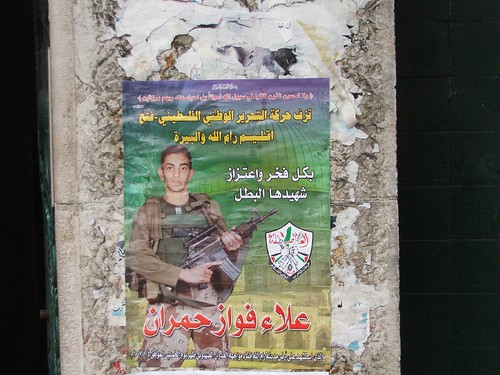
On a related note: The last Israeli public relations venture that received some attention in the blogosphere was a local anti-drug campaign in Tel Aviv, which featured mock shaheed posters displaying a hipster in a training suit about to embark on a "suicide mission" of mixing drugs and alcohol. Lisa, fresh from a trip to Ramallah, where she took some photographs of the real thing, has coverage of this and many other great posts (An Israeli in Ramallah, Make Love not Terror, and Ivri goes English nice!). Also not to be missed, however, is Nobody's typically irreverent defense of the ad; he calls it "brilliantly cynical" - a description that also often applies to his blog.

Wednesday, June 20, 2007

Living in a Dream

Sigmund Freud and his daughter Anna (Source: Freudianslip)

I am not sure about Uzi Benziman's conclusion, citing Anna Freud, that "among adults, seeking satisfaction through imagination indicates a serious psychological disorder." But his main argument is a harsh rejoinder to the self-delusion about the West Bank and Hamas that has gripped the country:
Some members of Israel's leadership, including cabinet ministers, Knesset members and defense and policy advisers, have recently come to resemble those children who solve their problems by daydreaming. When they say that the Hamas takeover of the Gaza Strip has opened a rare window of opportunity, they are also laying out the next solution to the Palestinian problem: hand over responsibility for Gaza to Egypt. There are even some who propose granting Jordan an official role in the West Bank.
In the meantime, Abbas is trying his best to extract certain favors to him from Israel. In this, he is backed by the U.S. The test of measures such as freeing Barghouti or removing checkpoints, however, should not be something as vague as "strengthening the moderates." It is an illusion to think that Abu Mazen's government will be reinforced by favors that Israel or the U.S. bestows upon it. Rather, such measures should be evaluated on the basis of sound military, social, and political yardsticks, which are independent of the psychological disorientation caused by dreams of a divorce between Gaza and the West Bank. Eventually, the two will be linked again. Almost all the Arab leaders are pushing Abbas and Haniyeh to repeat another Mecca-style agreement to paper over the differences that exist; they too have staked too much on a "united Palestine" to consent to a permanent separation.

Ze'ev Schiff (1933-2007)

Israel's foremost military commentator, Ze'ev Schiff, has died. It seems like yesterday that I quoted one of his articles here. His professionalism will be sorely missed.

UPDATE (6/24/07): A wonderful appreciation of Schiff by Robert Satloff, director of the Washington Institute for Near East Policy:
Ze'ev had no ambition except the truth; he had no vanity except the excitement of the scoop; he had no ideology except the pursuit of a secure peace for his people. Was he a dovish hawk or a hawkish dove? It is difficult to say. Ze'ev refused to be pigeonholed or to play a role that others would define for him. But he never refused the chance to humble the mighty or speak truth to power. And still, because he focused on the facts and never traded in rumor, innuendo or the voyeurism that too often passes for journalism, even the mightiest, once humbled, would seek him out once again.

Monday, June 18, 2007

Dissolving Lebanon

As'ad AbuKhalil has been trying to explain his political theology to his mother:
Knowing of my views against the very existence of Lebanon as an entity, she would always ask me how that is possible. I would tell her that the dissolution of the entity (into a larger Arab entity) is the solution. [...] I said that imagine when Syria is run well, and the Asad regime is overthrown (and hopefully not by the Muslim Brotherhood or the Khaddam version of Ba`thism): Lebanon would be better served by dissolving into a larger Arab entity. Like the Zionist entity, Lebanon has posed a danger to, and inflicted harm on, its inhabitants and on the Palestinian cause.
You see, he really has the best interests of the Lebanese in mind. The "Zionist entity" can go to hell. Its primal sin, one apparently also committed by Lebanon, is causing harm to the Palestinian cause. I am curious how this dogma, which has turned Palestine into Jesus (guess who killed it), came to occupy such a big role in the religion of the angry Arabs.

Sunday, June 17, 2007

Hamastan and Fatah-stine

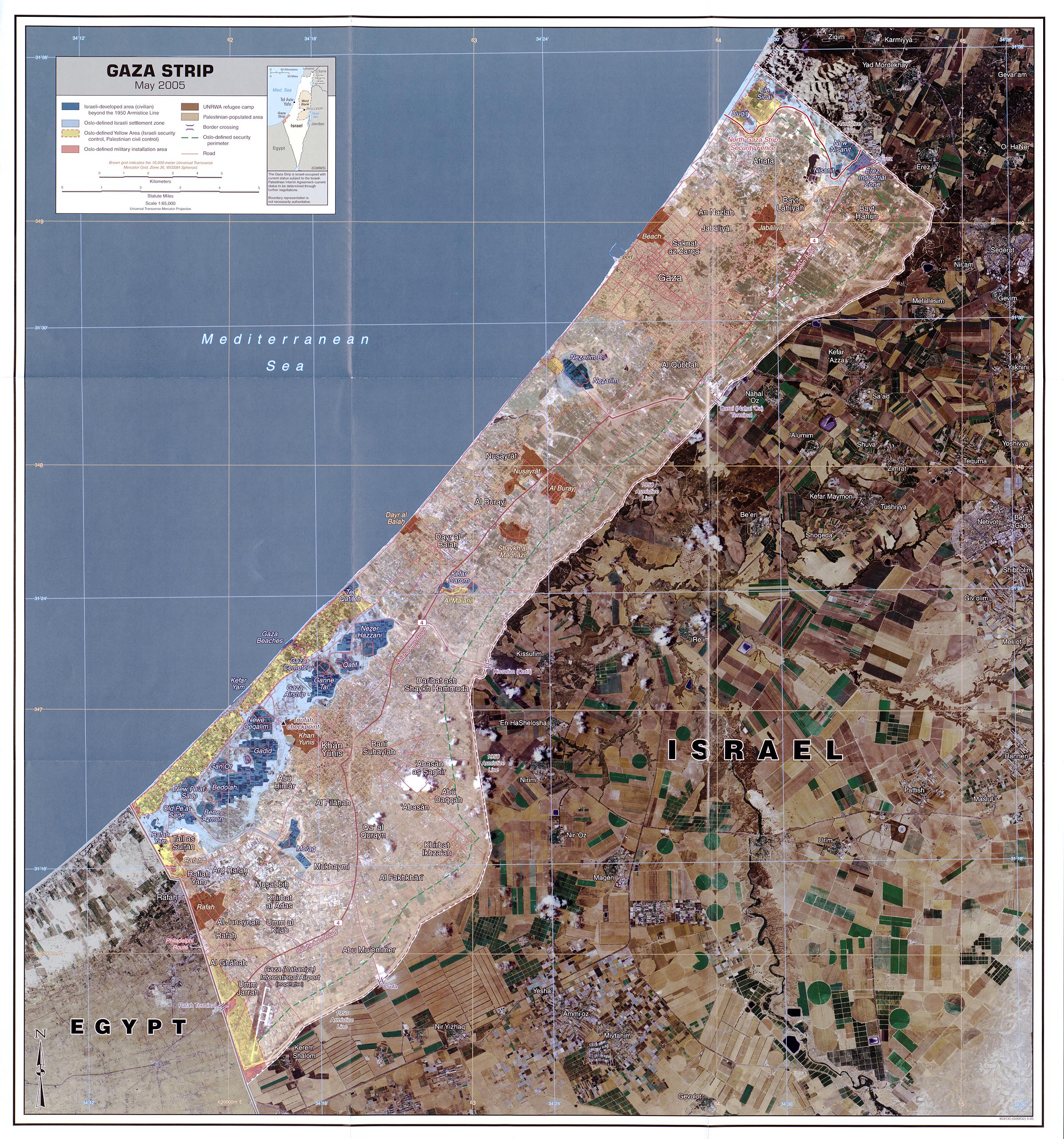
Map of Gaza (May 2005, Perry Castaneda)

The mantra that we are hearing in the wake of Hamas's victory in the Gaza Strip is rather familiar. The Americans have been telling the Israelis for some time now: support the Palestinian "moderates." It seems that this idea has also excited Olmert. Right now, the Americans as well as the Israeli foreign ministry are pushing for moves to strengthen Abbas. The goal seems to be to turn the West Bank into some kind of oasis showcasing the fruit earned by moderates who deal pragmatically with the U.S. and with Israel rather than embracing the genocidal extremism of Hamas. This is a nice thought. But it will not work.

The battles between Hamas and Fatah in Gaza showed how weak Abbas's forces are militarily. The lack of leadership, coordination, and, most importantly, motivation on the side of Fatah's forces were all too apparent. Neither the political echelon of Fatah nor the security apparatus showed enough determination to impose its vision on Palestinian society. This may be because no such vision exists on the side of Fatah, and because the fighters knew that they did not have a great deal of popular support. Hamas, on the other hand, showed no such scruples. While the organization is not invincible and may face significant challenges from various clans, it has enough committed fighters as well as popular support for its ideas and style of government in Gaza.

What lies behind Fatah's military failures is a major structural weakness - a disconnect between the instruments of violence and political institutions with popular backing. Rightly or wrongly, Hamas's armed forces seem to be perceived by enough Palestinians as being guided by more or less representative political institutions. Fatah's fighters, on the other hand, appeared like disconnected crews of private militiamen fighting for individual feudal lords rather than a coherent ideology.

Given this structural problem, it seems rather foolish to throw more arms and money at the Fatah forces. Likewise, I am not sure that spending funds on certain civic projects will necessarily do that much good. Much of the money will likely end up in the pockets of PA officials anyway. The rest will be invested haphazardly in certain towns and neighborhoods attached to various local bosses. Much like the private militiamen, it will be atomized power (economic rather than military in this case) without a unifying ideology or a responsive mechanism of control.

Perhaps equally damaging is the bad odor that clings to American and Israeli money or support among Palestinians today. Never mind that they are all sitting in big piles of it, and that even a Hamas-ruled Gaza cannot achieve autarky from Israel; the linkage of Fatah with the U.S. and the Zionists will remain a powerful weapon in Hamas's arsenal. Thus, supporting Fatah may backfire.

There are people who see the outcome of the first phase of the Palestinian civil war as some kind of new opportunity. Some of this chatter can be dismissed right away as wishful thinking. Whoever thinks that Hamas's victory in the Strip will lead to the permanent severing of Gaza from the West Bank and hence bring about an end to the dream of a united Palestinian state is living in a kind of movie. Neither the Palestinian people nor its leadership will agree to this.

Although Abbas is playing hard to get right now and rebuffing overtures by Hamas, I would not count on him to faithfully execute American or Israeli objectives. Fatah will come to some kind of accommodation with Hamas at the end, although the two factions will continue to hate each other's guts. Most likely, we will see a situation where both Hamastan and Fatah-stine claim the right to negotiate on behalf of all Palestinians - a situation of dual power that might be institutionalized in another complicated constitutional arrangement. This would bring Israel back to the status quo ante.

Given Fatah's current weakness, it almost seems like dealing with Hamas instead would be a better choice. Here, Israel might be able to negotiate with an entity that has something closer to a monopoly on violence, which can gain a great deal from Israeli carrots and can offer certain things in return. (For an excellent overview of the economic situation faced by Hamas and the carrots as well as two-sided sticks available to Israel see this article in today's Ha'aretz). But the problem is that Israel is dealing with an enemy in Gaza who does not appear to be acting pragmatically. Furthermore, this enemy is armed and egged on by two foreign powers - Iran and Syria - which do not want stability on Israel's southern border, just as they want to maintain a strike force on its northern boundary.

There have been some rumors in the press that Israel's newly-appointed Defense Minister Ehud Barak is planning a massive invasion of the Gaza Strip. I am hoping that this is part of an information operation to warn Hamas and its sponsors. If it isn't, I wonder how Barak would define the objectives of such an operation, and what outcomes he might foresee.

Saturday, June 16, 2007

The Bundesnachrichtendienst

BND spy "Fat Willy" (Photo: Spiegel)

Ha'aretz
has a long profile of former German intelligence officer Willy Dietl, a famous journalist and writer, with extensive experience in the Middle East and Central Asia. Dietl's cover was blown in November 2005 when the chief of Germany's Federal Intelligence Service, under pressure from the country's media. revealed to a parliamentary commission that the BND had paid five journalists to inform on their colleagues, in a bid to track the source of leaks. The revelation caused a scandal in Germany, and the once-respected reporter and author of several books about the intelligence community and terrorism (Spy Ladies: Frauen im Geheimdienst, Holy War, Bridgehead Afghanistan, Im Visier: ein Ex-Agent enthüllt die Machenschaften des BND) now lives in disgrace.

Among his successes as a collection agent, Dietl counts his recruitment of two agents, from an unnamed country (Jordan or Syria?), who monitored the Abu Nidal crew:
Willy Dietl credits the crowning glory of his achievements to his running of two intelligence officers from a country that borders on Israel. He declines to name the country, because the two are still in active service. Dietl met a relative of the two, who was arrested in the country in question after he was falsely informed on. After the man's release, he moved to Germany, where Dietl helped him start life anew and became friends with him. His two relatives, the intelligence officers, were very impressed by Dietl's efforts and grateful to him.

"Over time I became friends with the two of them," he relates. "Only afterward did I discover that they were professional intelligence officers, who were in charge of collecting information and monitoring the activity of the Abu Nidal terrorist organization. After a while I recruited them for the BND. They gave me a complete list of Abu Nidal's operatives, their passport numbers, their code names, their travel plans to Europe and many other details. It was a gold mine. You have to remember that in the 1980s, Abu Nidal's organization was considered the most dangerous and most daring terrorist group in the world. They carried out many attacks against targets in Austria and Italy, against Israeli and Jewish targets and against the PLO. Now, suddenly, we had advance information about every trip of the organization's people to Europe."

On the BND's relations with the Mossad:
Do you know whether the BND shared this information with other espionage organizations, including the Mossad?

"I don't know, but I have no doubt that they did. The Mossad is one of the closest organizations to the BND, and Israel was one of the targets for attacks by the Abu Nidal group."

On Germany, I thought this was particularly interesting and accurate:
In Germany, in contrast to Israel, the public does not want to understand that intelligence work is necessary to protect the country's citizens and its democratic character. In Germany, the moment your name is mixed up in anything related to intelligence, you are considered odious, so you can imagine how badly the affair has hurt me.